
Bura Galéria
Bura Gallery is a progressive Roma contemporary art gallery and cultural community space located at 5 Kőfaragó Street in Budapest’s 8th district. The gallery brings together a community of young artists and intellectuals who regard art not only as a cultural practice, but also as a means of fostering social dialogue and critical thinking.
Our statement: “We believe that Roma culture is an integral part of Hungarian and European culture, and we believe that contemporary critical narratives are also an integral part of Roma culture.”
Bura Gallery is not merely an exhibition space, but a collective platform for thinking, creating and engaging in dialogue. Artistic activism, social awareness and political art play a central role in our programme, alongside a critical examination of power structures and social elites. We stand in solidarity with marginalised and vulnerable groups and aim to create an open and inclusive space that provides room for diverse experiences, perspectives and critical voices.
We do not approach Roma culture as something isolated or confined exclusively to the preservation of tradition, but as an active and constantly evolving part of contemporary Hungarian and European culture. Through our exhibitions and artistic projects, we address current social and political issues affecting Roma communities by engaging with the visual languages, critical practices and artistic tendencies of contemporary art.
GYPSY CRIMINALS FOR PRESIDENT
At Budapest Contemporary, Bura Gallery presents Gypsy Criminals for President, the latest series by the Roma Dadaist art collective Gypsy Criminals. The exhibition consists of eleven oil paintings on canvas and a series of thirteen posters. The works are presented as a unified installation, evoking the visual language of political campaigns, electoral propaganda and public communication.
Gypsy Criminals is a Roma Dadaist art collective founded in 2024. Its founding members are Mc Lakatos Hunor (aka Oláh Norbert), Gróf Nagybányai Horhy Miklós Leonidasz (aka Szegedi Tamás), and Hádész Junior, a twenty-five-centimetre-tall Miniature Pinscher. The group’s name deliberately appropriates one of the most heavily charged expressions in Hungarian public discourse. The term cigánybűnözés (“Gypsy crime”) was present in criminological and law-enforcement discourse during the Kádár era and today carries discriminatory and racist connotations, while also appearing as part of far-right political rhetoric.
Through political and social satire, the collective examines contemporary Hungarian reality using provocative and often deliberately anti-PC strategies. One of the central themes of their artistic practice is the hypocrisy of elites: the contradictions, double standards and mechanisms of self-justification within political, economic, cultural and artistic power structures. Their criticism is not aligned with a single political side: far-right and far-left rhetoric, populism, identity politics and different manifestations of power can all become subjects of their satire. Their Roma Dadaist method is based on appropriation, over-identification, absurdity, provocation and self-irony.
Gypsy Criminals for President can be understood as a particular social and political imprint of the NER era in the period leading up to the elections. Created immediately before the vote, the works respond to a public sphere in which propaganda, culture wars and political absurdity often seemed to surpass the possibilities of satire itself. The series therefore functions not as a retrospective commentary, but as a direct visual response to an intensely charged historical moment.
The paintings draw on the visual languages of naïve painting, political posters and propaganda imagery. A recurring motif is the mask, referring simultaneously to racist stereotypes, the performativity of identity, the theatricality of political role-playing and the hypocrisy of elites. The collective appropriates the language of political communication and turns it back on itself through exaggeration and by pushing its internal contradictions to the point of absurdity.
The events of the most recent election have already become part of the history of the present. Only a few months ago, Gypsy Criminals for President emerged as an ironic response to an intensely charged political moment and to the absurdity and drama of the campaign. Today, however, the series can also mark the beginning of a process in which we must start to process, interpret and place into historical perspective the social and political experiences of the past two decades. The series becomes a grotesque visual record of this recent past, while refusing to retreat into the safety of historical distance: alongside critically examining the past, it insists on continuously questioning the power structures, contradictions and hypocrisies of the present.
-
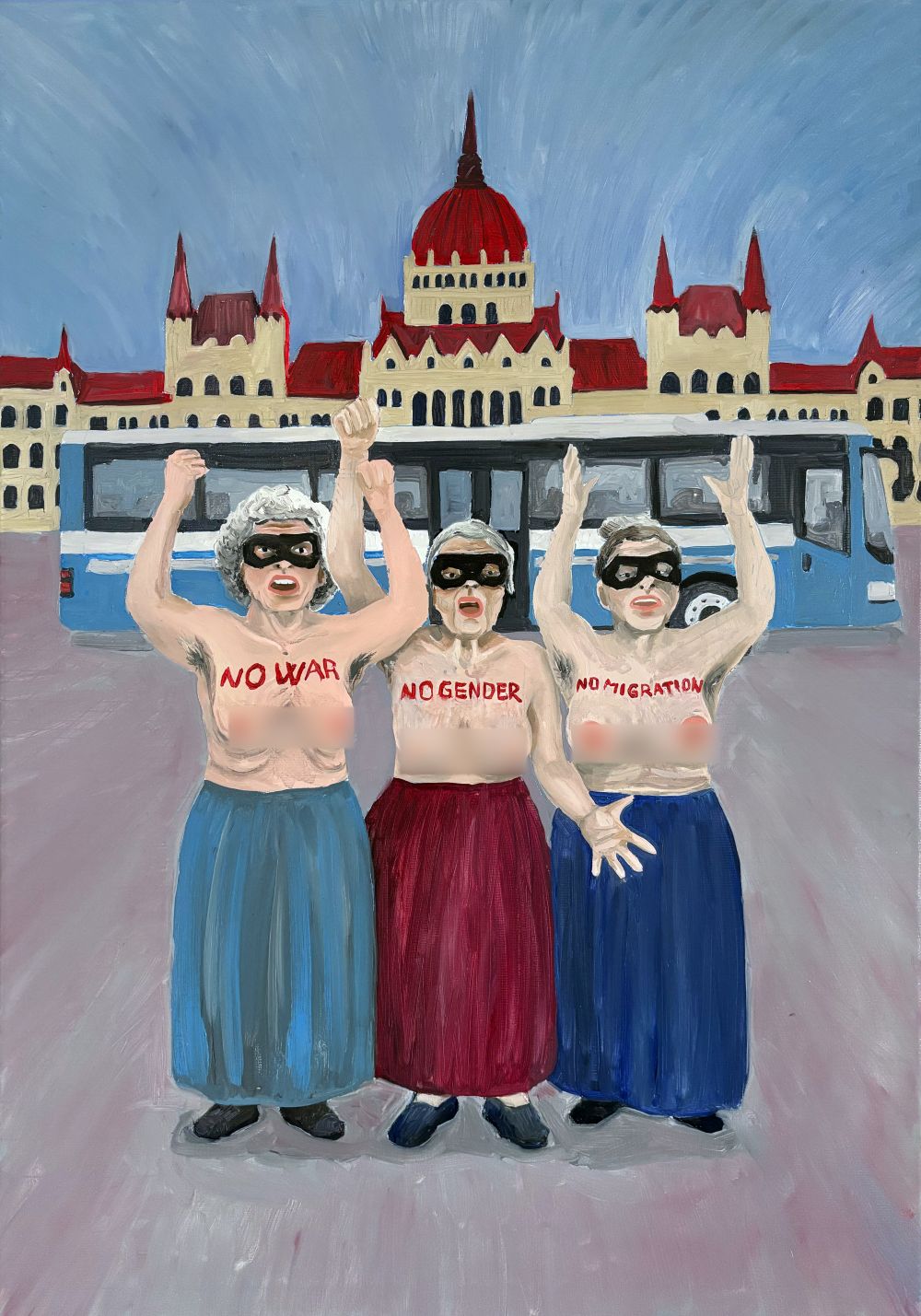
- No War, No Gender, No Migration
-
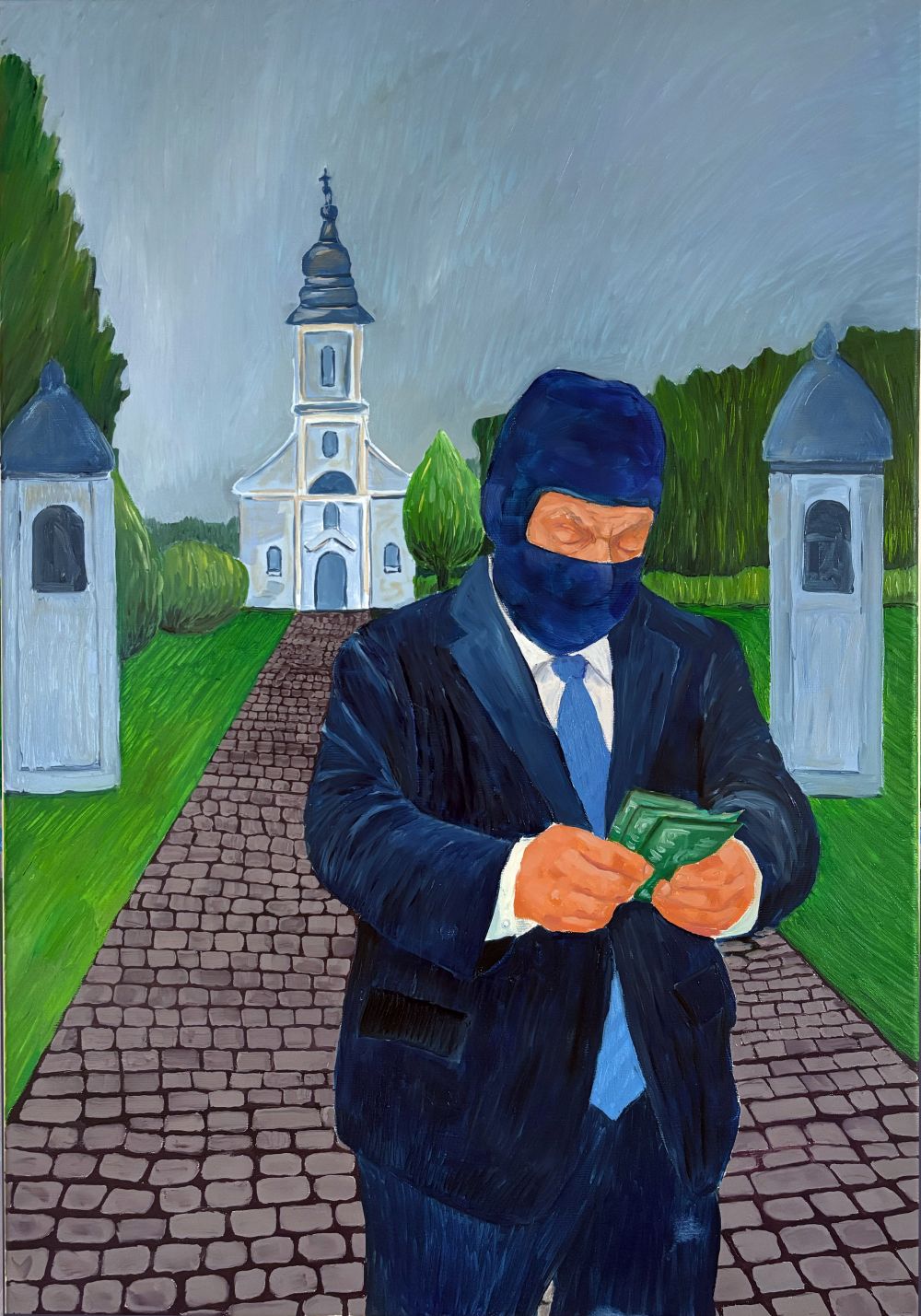
- Most jövök a templomból
-
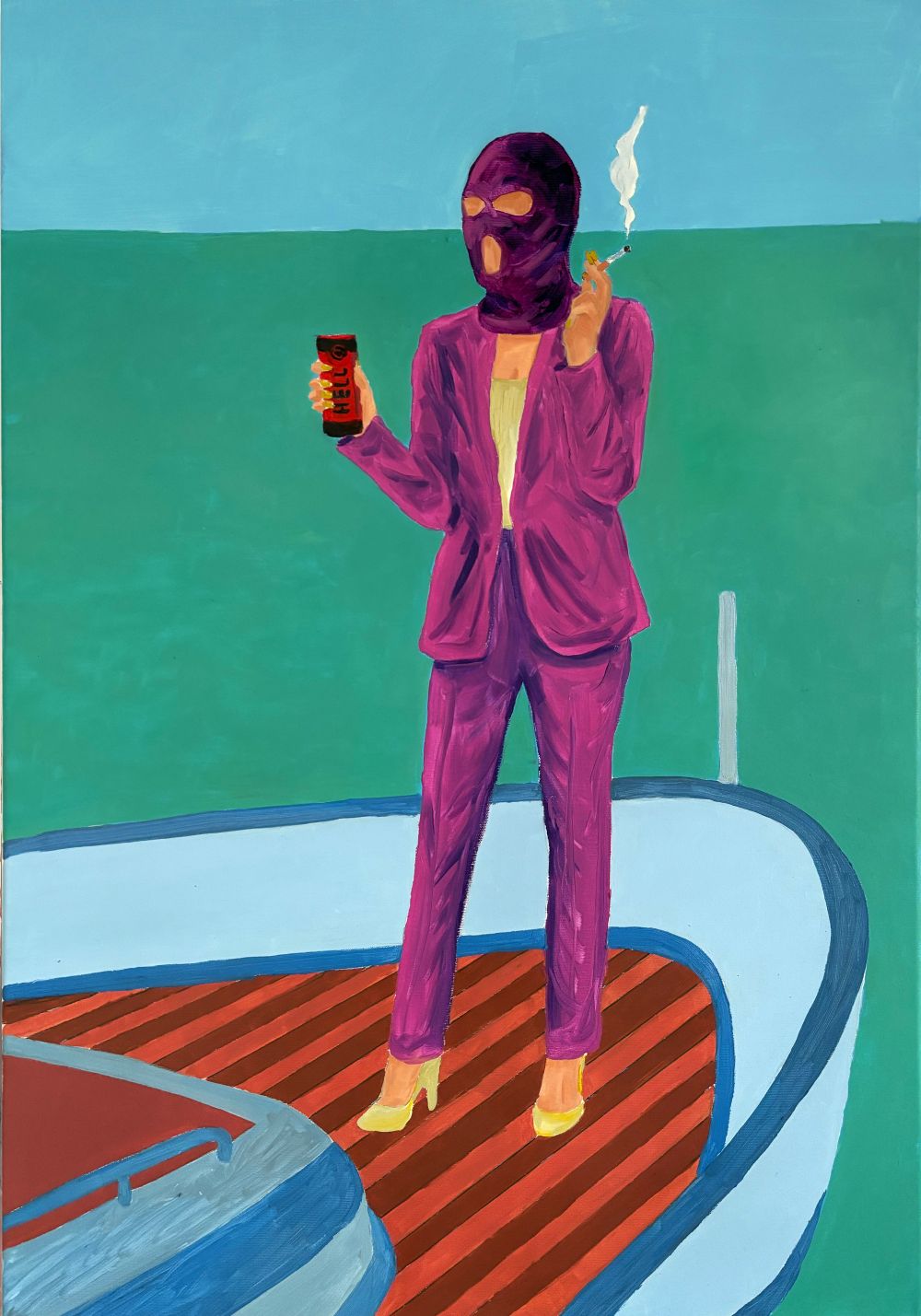
- High Life
-
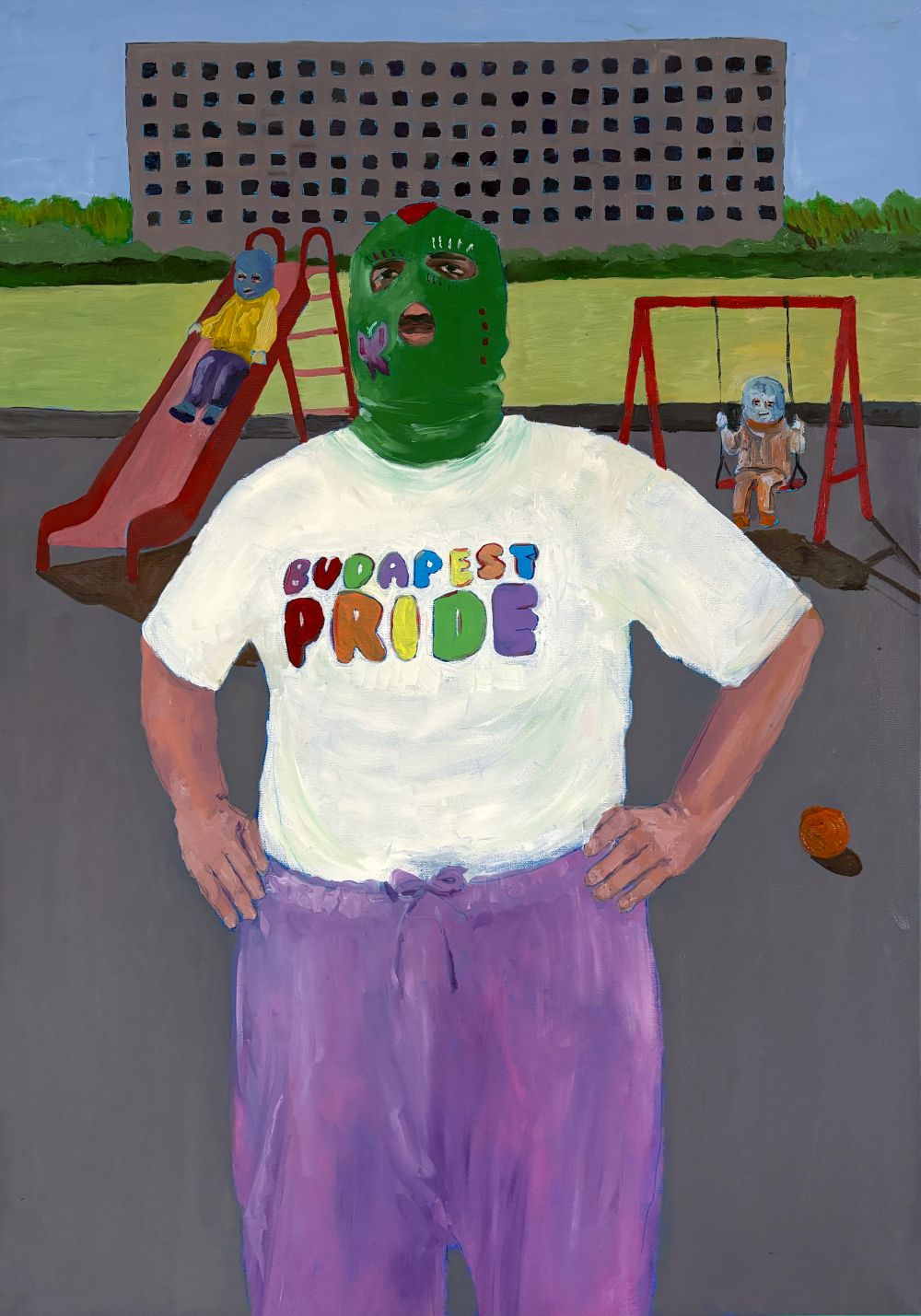
- Pride
Contact informations
Address: 1085 Budapest, Kőfaragó utca 5.
Open: Thu – Sat 3:00 PM – 7:00 PM
Phone: + 36 (30) 261 3803
E-mail: bura.gallery@gmail.com
Facebook: www.facebook.com/bura.galeria

