Anna Táncos
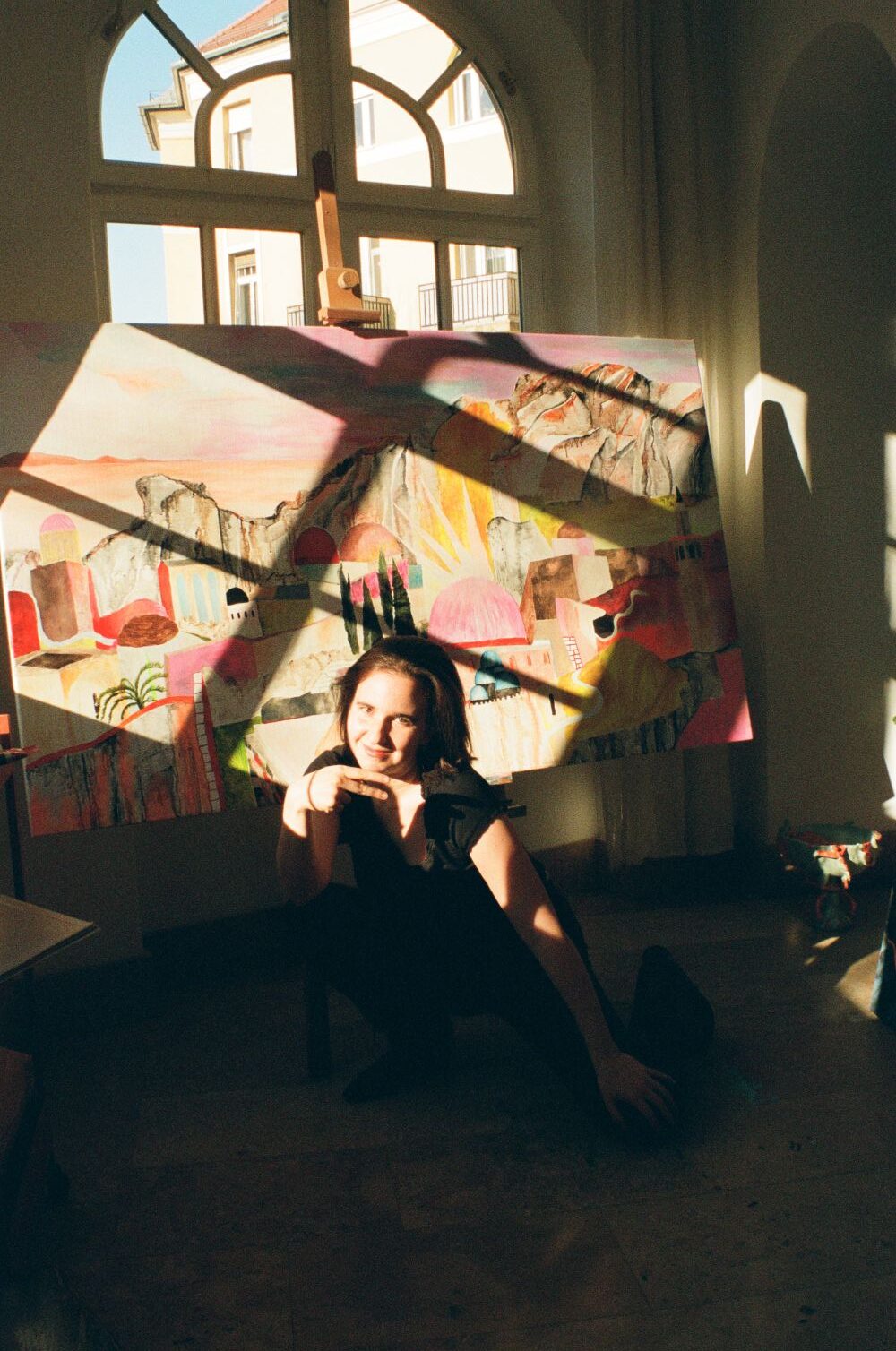
I graduated in 2017 from the Department of Public Building Design at the Faculty of Architecture, Budapest University of Technology and Economics. Reflecting my interest in the fine arts, I designed an Amerigo Tot Memorial and Museum for my master's thesis, for which I received a Diploma Award. In architectural design, I have always sought—and continue to seek—fine art and sculptural approaches. During my Erasmus scholarship, I studied in Rome, where architectural history, the heritage of European antiquity, and the harmony between architecture, architectural sculpture, and painting made a profound impact on me—an influence that remains decisive in my work to this day. Indeed, the year I spent in Rome served as the main inspiration for my initial artistic endeavors.
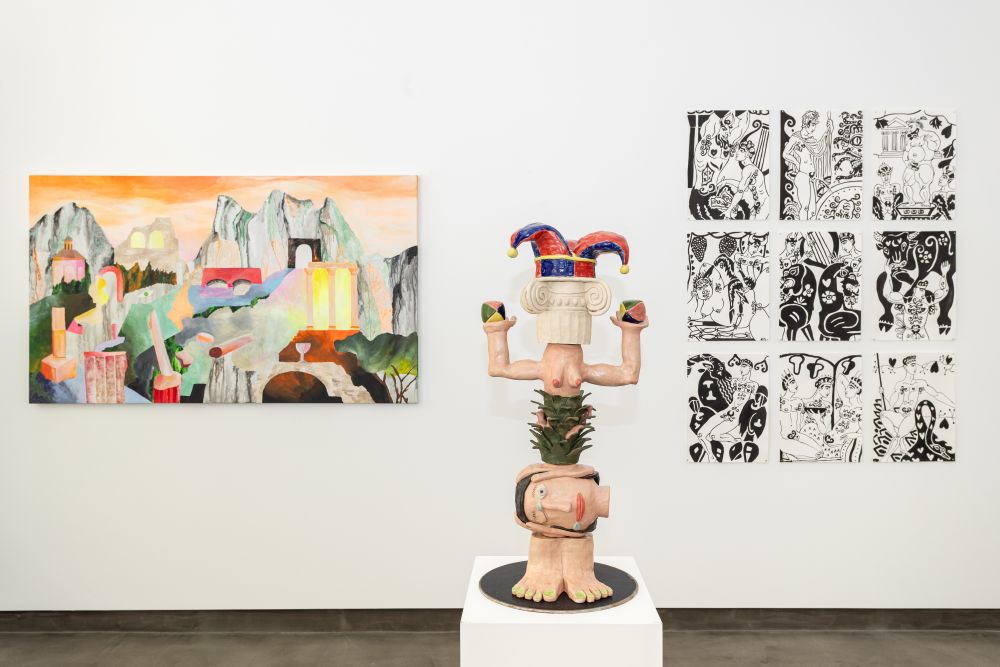
Alongside my graphic and architectural projects, I initially focused on ink drawings and watercolors. Over the years, I gradually shifted toward painting. At first, I created smaller-scale works exploring the blurring of boundaries between real and fictional locations, revealed through subjective depictions of buildings, cityscapes, and landscapes. In addition to paintings, I created graffiti, whose site-specificity, freedom, and large scale provided further inspiration for my fine art practice. In 2022, I began painting on larger canvases, renting a studio space at the Nyolcésfél art center for a few months before continuing my work in a home studio. Since 2022, I have also been making ceramic objects. In 2023, I participated in several group exhibitions organized by the Useless Gallery, followed by group shows at the Dindin Gallery in 2024.
I have been represented as an artist by the Rechnitzer Gallery since January 2025.
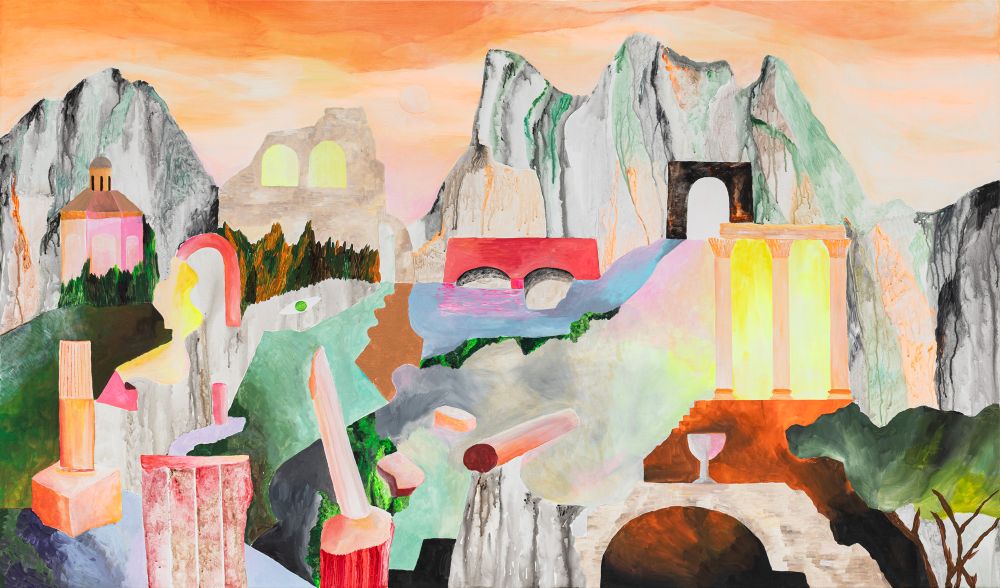
On the Ruins of Rome (Róma romjain)
-
Medium: Acrylic on canvas
-
Dimensions: 170 x 100 cm
-
Year: 2026
Short Description:
The painting On the Ruins of Rome depicts an internal, psychological landscape. The city and ruins visible in the image are not presented as a specific physical site, but as a space constructed from memories, emotions, and imagination. As an artist with a background in architecture, a recurring theme in my practice is the cultural and symbolic meaning of architecture, as well as the way cities and historical spaces carry memory and emotion.
For me, the ruins in this painting serve as symbols of transformation. Rather than recalling destruction, they evoke the process through which layers of the past become integrated into the present, enriched with new meaning. Thus, the ruin carries the experience of both change and continuity, holding the potential for remembrance and reconstruction.
The work invokes a personal, imaginary realm woven through with female experiences, where built forms become metaphors for memory, identity, and transformation. As a female creator, I am particularly drawn to the question of continuity: how preserved memories, experiences, and heritage integrate into our lives, gradually becoming part of our identity.
The painting offers one possible reading of female identity: an inner architecture in which the traces of the past do not vanish, but live on in new forms, shaping our self-image and our place in the world.