Anikó Herbert
Haniko – Visual Artist
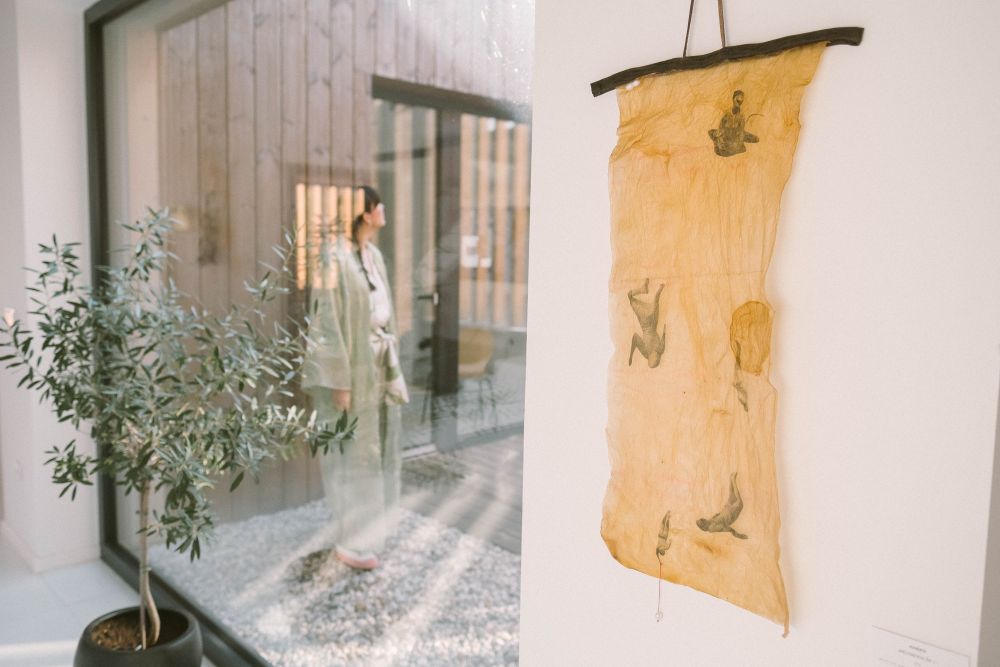
The core of my work is not to capture the beauty of nature, but something bolder: an attempt to rewrite the power dynamic between humanity and the natural world. Paper breathes, wood remembers, bacteria create.
ATTENTION AS AN ACT OF CREATION
The starting point of my artistic practice is a fundamental resistance: against speed, productivity, and spectacular outcomes. The slow, manual processing of materials here is neither nostalgia nor an aesthetic trick—it is an ethical choice. In a world where everything accelerates, I deliberately slow down. For me, attention, care, and material-bound thinking are not the opposites of efficiency, but ways of approaching a deeper meaning.
Nature is not a backdrop in my work. It is an active intellectual partner—one that shapes, talks back, and sometimes creates something entirely different from what I had planned.
MATERIALS THAT CARRY WEIGHT
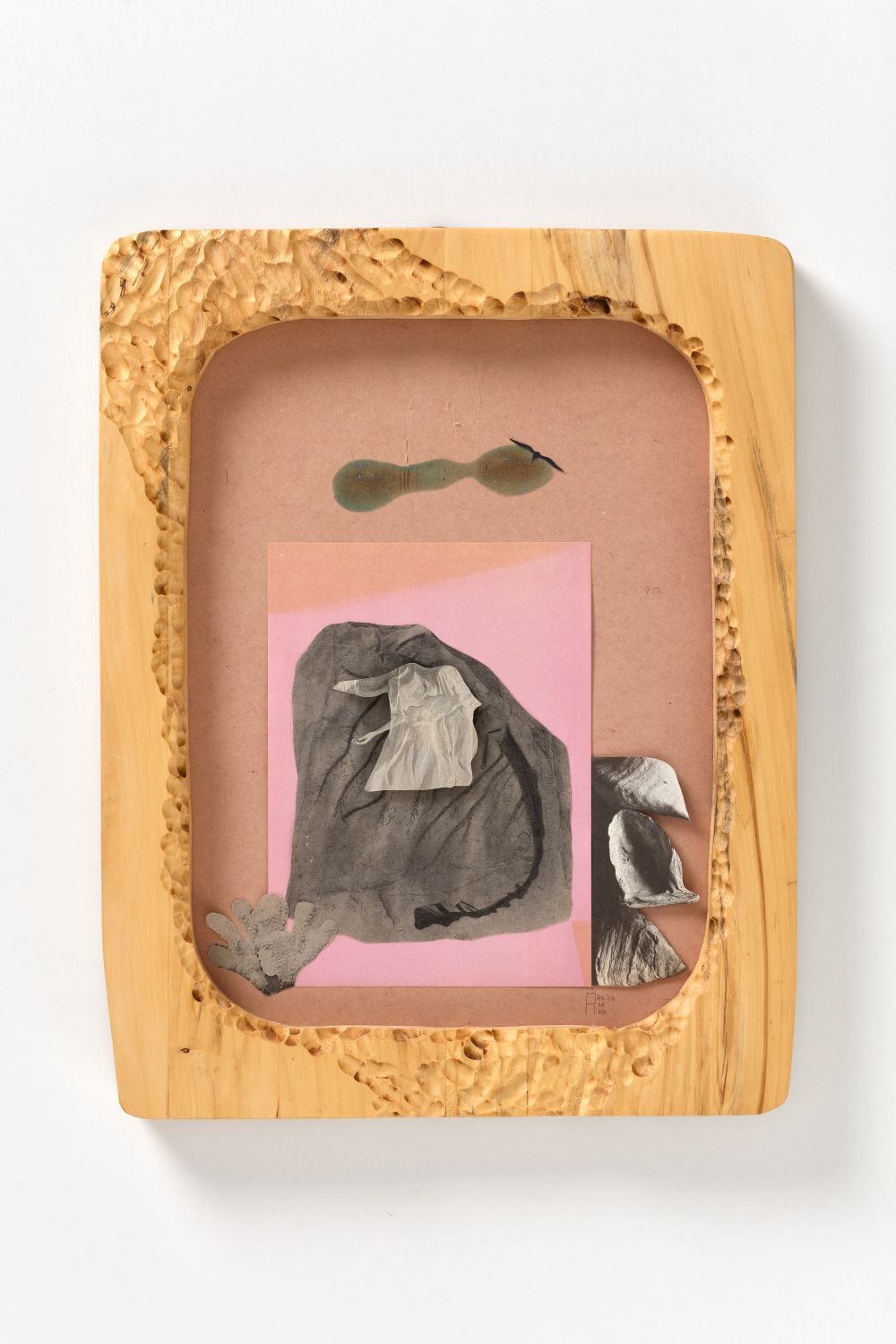
Handmade paper, structurally manipulated wood, bacterial cellulose produced through fermentation—my choice of materials is never merely an aesthetic question. Every material carries layers of culture and memory that remain invisibly present in the finished piece. Decay, temporal transformation, and the reaction to moisture are not sources of error in this work—they are the message itself. The creative process is a dialogue, not a control mechanism.
✦ FEMALE FIGURES, BOTANICAL FORMS
Female figures, mythological archetypes, and botanical forms recur in my work—not as illustrations, but as condensed meaning. These shapes are visual traces of forms of knowledge pushed to the margins of collective memory: forgotten female experiences, vulnerable models of coexistence that do not narrate, but signal. They do not offer a narrative—they offer a sensory encounter with an invisible, yet deeply real web of relations.
To me, the artwork is a co-process: a sensory space in which human and material, living and non-living, exist together—and think together.
SLOWING DOWN AS A RESPONSE
Attention, memory, and slowing down are not antidotes to the challenges of the contemporary world—but they are possible answers to the question of how to exist within it differently. These works are not illustrations of the environmental crisis. Rather, they are proposals: how to relate differently to material, to time, to the living. They do not offer solutions, but a space—where thought can travel more slowly, yet more deeply.
MATERIALS
-
Handmade paper
-
Structurally manipulated wood
-
Bacterial cellulose (via fermentation)
-
Natural pigments
-
Botanical extracts
THEMES
The human-nature relationship · Forgotten forms of female knowledge · Ecological memory · The materiality of time · The intersection of mythological archetypes and botanical forms
In an era where productivity is the norm and attention is scattered, this practice articulates an unusual demand: Be present. Slow down. Pay attention to what changes slowly.
Remembrance, slowing down, and care are not weaknesses—they are the beginning of a different kind of strength.
SHE LEFT NO MARK – ONLY NOTES
FROM THE DEPTHS OF LAKE BALATON, FROM THE OBLIVION OF THE ARCHIVES
Two 20th-century female scientists—a limnologist and an algologist—whose work is preserved in the history of science today mostly through footnotes, archival fragments, and sparse references. Olga Sebestyén and Erzsébet Kol did not follow careers aligned with the gender expectations of their time: they brought the hidden interconnections of the natural world into light within a social and institutional environment where scientific authority and autonomous intellectual agency were rarely taken for granted as opportunities for women.
Haniko’s entry takes this tension as its point of departure. She left no mark – only notes is not a biographical reconstruction, but a sensory, material-based space of memory: an inquiry into how two significant female legacies can become nearly invisible within a predominantly patriarchal scientific history. The artwork gives sensory form to the question emerging from these absences: how can we preserve those female life achievements, forms of knowledge, and creative presences that shaped the world not through prescribed roles, but according to their own internal imperatives?
Haniko does not reconstruct the lives of Olga Sebestyén and Erzsébet Kol. She brings into sensory presence that which never truly vanished—it simply was not granted its rightful place in historical memory.
Two female scientists—a limnologist and an algologist—whom the history of science preserved only in footnotes. Haniko’s works do not reconstruct their lives. They bring into sensory presence that which never truly vanished—it simply became unseen.